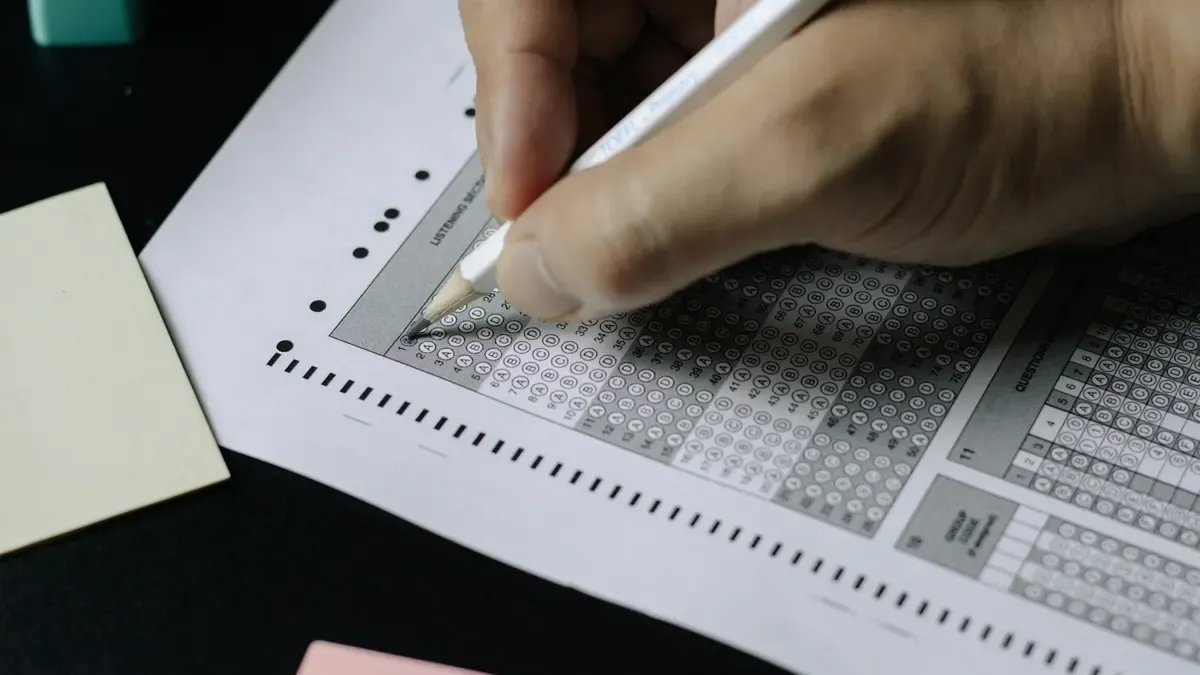
A mock test has two halves: the three hours you spend taking it, and the time you spend reviewing it. Most students do only the first half, check the score, and move on. The review is where scores actually improve.
Step 1: review within 24 hours
Review the paper the same day or the next, while you still remember how you thought about each question. Set aside about as much time as the test itself: three hours for a full JEE Main or NEET mock.
Step 2: go through every question, not just the wrong ones
Put every question you got wrong, skipped or guessed into one of these groups:
- Concept gap: you did not know or understand the idea. Fix: go back to the chapter and solve 15 to 20 questions on it.
- Silly mistake: a calculation slip, a sign error, a misread question or a wrong unit. Fix: note the pattern and build a habit against it, such as underlining "NOT" or "incorrect" in every question.
- Time pressure: you could have solved it but ran out of time, or spent too long somewhere else. Fix: change your paper strategy.
- Lucky guess: you got it right without being sure. Fix: treat it as a mistake and learn the concept.
Also look at the questions you got right slowly. A correct answer that took six minutes is a problem in a paper where you have about two and a half minutes per question.
Step 3: keep an error log
Keep one notebook for all mocks. For each mistake write:
- the subject, chapter and topic,
- which of the four groups it belongs to,
- what you did wrong, in one line,
- the correct idea or method, in one line.
Read the whole log once a week, and every day in the last two weeks before the exam. Students who do this find the same mistake stops appearing after two or three mocks.
Step 4: track numbers that matter
After each mock, record more than the total score:
- marks in each subject,
- number of attempts and accuracy (correct ÷ attempted),
- marks lost to negative marking,
- time spent on each subject.
If accuracy is below about 80%, you are attempting too many uncertain questions. If accuracy is high but attempts are low, you need more speed. Our article on negative marking goes into this balance in detail.
Step 5: turn the review into next week's plan
End every review with three to five specific tasks, for example: "Revise the definite integration properties and solve 25 questions", or "In the next mock, finish Chemistry in 50 minutes". These tasks go straight into your weekly timetable.
How many mocks?
In the last two to three months, two or three full mocks a week is plenty if each one is properly reviewed. Ten mocks without review teach less than four with a careful one.
Every HAwk ACademe test is followed by a detailed analysis and a doubt session, so students know exactly what to fix next. See our JEE and NEET programs.